Raise3D · Accessories
Raise3D Industrial PET GF Filament - RFID
Read customer reviews ↗︎Shipping is calculated for your configuration and destination. Shipping details ↗
Secure checkout
Buying for an organization?
We accept purchase orders from Education, Government and Business customers.
Discuss a purchase order ↗︎Price match guarantee
Found a lower eligible price? Review our guarantee and request a match.
See terms ↗︎Manufacturer warranty
When you purchase from 3D Printers Depot®, a premium authorized retailer, your purchase includes the official manufacturer warranty and lifetime technical support.
Explore the details
Get to know your next machine.
Raise3D Industrial PET GF Filament - RFID
Colors:
- Red: (PMS: 3546 C / RAL: 3024)
- Gray: (PMS: 429 C / RAL: 7040)
- Orange: (PMS: 151 C / RAL: 2007)
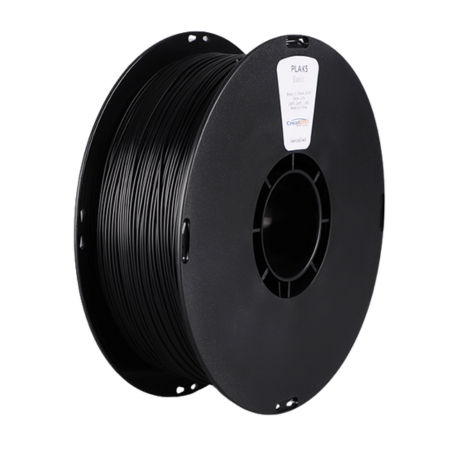
- Black: (PMS: 446 C / RAL: 9017)
Raise3D Industrial PET GF is a glass fiber-reinforced composite filament based on PET (Polyethylene terephthalate). Well-dispersed glass fibers enhance the rigidity, strength, heat, and chemical resistance of PET matrix. After annealing, PET GF stabilizes its heat resistance at around 120 ℃, with tensile modulus and strength of over 4.1 GPa and 70 MPa respectively. Compared to glass fiber-reinforced Nylon filament, the high printability, dimensional stability, high creep resistance, and low moisture absorption makes PET GF an ideal choice for reliable glass fiber composite printing for strong and cost-effective end-use applications, such as jigs & fixture and functional parts. In addition, PET GF provides multiple color choices.
This filament is compatible with Raise3D Industrial PET Support Filament.
About the RFID version filament
This version comes with an RFID tag. When printed on the Pro3 HS Series 3D printers, the Pro3 HS Series RFID filament sensor can identify the filament type and verify the print parameters. However, this type of RFID-enabled filament can also be used on other compatible Raise3D 3D printers, even if the printer is not equipped with an RFID sensor.
*Due to the higher carbon fiber content of PET filaments, when printing PET GF, an extra wear-resistant nozzle and extrusion system are required for a consistent printing performance. The E2CF and the RMF500 are specially designed for printing high-performance fiber-reinforced composite filaments. As such, it is recommended to use the Raise3D Industrial PET GF filament exclusively on the E2CF and the RMF500.
Specifications:
1.75 mm/ 1 kg
| Property | Testing Method | Typical Value |
| Density (g/cm3 ) |
ISO 1183, GB/T 1033 | 1.38 |
|
Heat Deflection Temperature (°C)
|
ISO75 1.8MPa | 99 |
| ISO75 0.45 MPa | 120 | |
| Melt index (g/10 min) | 270 °C, 2.16 kg | 5.3 |
| Water absorption | ISO 62: Method 1 | 0.50% |
| Odor | / | Almost odorless |
| Solubility | / |
Insoluble in water
|
| Mechanical Properties | ||
| Property | Testing Method | Typical value |
| Young’s modulus (X-Y) | ISO 527, GB/T 1040 | 4130 ± 107 MPa |
| Young’s modulus (Z) | ISO 527, GB/T 1040 | 3322 ± 94 MPa |
| Tensile strength (X-Y) | ISO 527, GB/T 1040 | 71 ± 3 MPa |
| Tensile strength (Z) | ISO 527, GB/T 1040 | 34 ± 2 MPa |
| Elongation at break (X-Y) | ISO 527, GB/T 1040 | 2.56 ± 0.30% |
| Elongation at break (Z) | ISO 527, GB/T 1040 | 1.14 ± 0.11% |
| Bending modulus (X-Y) | ISO 178, GB/T 9341 | 3650 ± 66 MPa |
| Bending strength (X-Y) | ISO 178, GB/T 9341 | 115 ± 3 MPa |
| Charpy impact strength (X-Y) | ISO 179, GB/T 1043 |
6.56 ± 0.68 kJ/m2
|
Note: All testing specimens were printed under the following conditions: Nozzle temp 320℃ , Bed temp 80℃ , Print speed 45mm/s, Infill 100%, Infill angle ±45° All specimens were annealed at 100˚C for 8h
Note:
1. Dry PET GF at 70-80°C for 8-12 hours before printing, as low moisture content is crucial for final printed part quality.
2. After drying, we recommend to store PET GF filaments into Raise3D Filaments Dry Box during the printing.
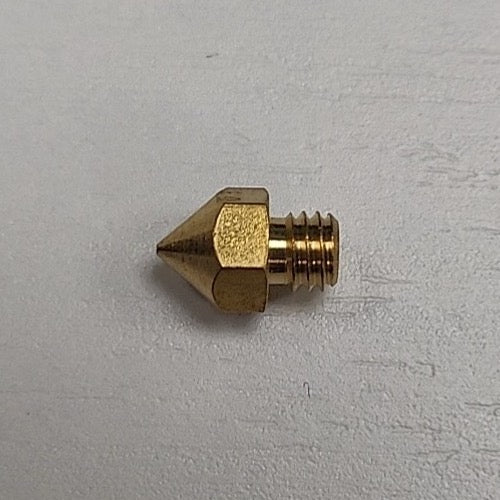
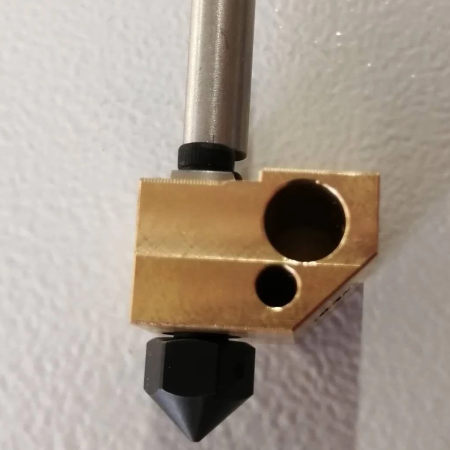
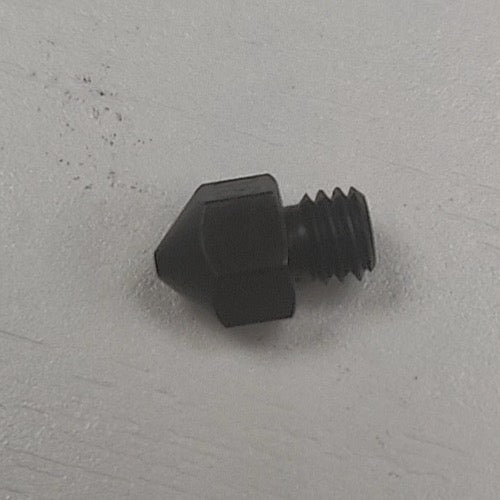
3. Abrasion of the brass nozzle happens frequently when printing PET GF. Using abrasion resistance nozzle, such as hardened steel and ruby nozzle, is highly recommended.
4. After the printing, it is recommended to anneal the model in the oven at 80-100°C for 8-12 hours.
5. For a small size model (side length <50 mm), annealing at 80°C for 8 hours is recommended; For a medium-size model (50mm<side length <150 mm), annealing at 80°C for 12 hours is recommended; For a large size model, 100°C for at least 12 hours is recommended.
6. After annealing, a maximum of 0.1 % dimensional shrinkage could be observed along the Z-axis, depending on infill and layer height, and no significant dimensional shrinkage along the XY-axes
7. If PET GF is used as the support material for itself, please remove the support structure after annealing.
Specifications:
1.75 mm/ 1 kg
| Property | Testing Method | Typical Value |
| Density (g/cm3 ) |
ISO 1183, GB/T 1033 | 1.38 |
|
Heat Deflection Temperature (°C)
|
ISO75 1.8MPa | 99 |
| ISO75 0.45 MPa | 120 | |
| Melt index (g/10 min) | 270 °C, 2.16 kg | 5.3 |
| Water absorption | ISO 62: Method 1 | 0.50% |
| Odor | / | Almost odorless |
| Solubility | / |
Insoluble in water
|
| Mechanical Properties | ||
| Property | Testing Method | Typical value |
| Young’s modulus (X-Y) | ISO 527, GB/T 1040 | 4130 ± 107 MPa |
| Young’s modulus (Z) | ISO 527, GB/T 1040 | 3322 ± 94 MPa |
| Tensile strength (X-Y) | ISO 527, GB/T 1040 | 71 ± 3 MPa |
| Tensile strength (Z) | ISO 527, GB/T 1040 | 34 ± 2 MPa |
| Elongation at break (X-Y) | ISO 527, GB/T 1040 | 2.56 ± 0.30% |
| Elongation at break (Z) | ISO 527, GB/T 1040 | 1.14 ± 0.11% |
| Bending modulus (X-Y) | ISO 178, GB/T 9341 | 3650 ± 66 MPa |
| Bending strength (X-Y) | ISO 178, GB/T 9341 | 115 ± 3 MPa |
| Charpy impact strength (X-Y) | ISO 179, GB/T 1043 |
6.56 ± 0.68 kJ/m2
|
Note: All testing specimens were printed under the following conditions: Nozzle temp 320℃ , Bed temp 80℃ , Print speed 45mm/s, Infill 100%, Infill angle ±45° All specimens were annealed at 100˚C for 8h
Note:
1. Dry PET GF at 70-80°C for 8-12 hours before printing, as low moisture content is crucial for final printed part quality.
2. After drying, we recommend to store PET GF filaments into Raise3D Filaments Dry Box during the printing.
3. Abrasion of the brass nozzle happens frequently when printing PET GF. Using abrasion resistance nozzle, such as hardened steel and ruby nozzle, is highly recommended.
4. After the printing, it is recommended to anneal the model in the oven at 80-100°C for 8-12 hours.
5. For a small size model (side length <50 mm), annealing at 80°C for 8 hours is recommended; For a medium-size model (50mm<side length <150 mm), annealing at 80°C for 12 hours is recommended; For a large size model, 100°C for at least 12 hours is recommended.
6. After annealing, a maximum of 0.1 % dimensional shrinkage could be observed along the Z-axis, depending on infill and layer height, and no significant dimensional shrinkage along the XY-axes
7. If PET GF is used as the support material for itself, please remove the support structure after annealing.
Before it arrivesPlan your delivery.
support@3dprintersdepot.com
Plan your delivery.
Start with confidence.
support@3dprintersdepot.comMon–Fri · 9am–6pm PST
Freight & receiving
Large machines may require freight delivery and suitable unloading equipment. Check the dimensions and shipping weight in the specifications, then confirm any access or appointment requirements with us.
Shipping costs & timing
Shipping costs and eligibility depend on the product and destination. Lead times depend on supplier stock, dispatch, carrier service and, for international shipments, customs. Checkout shipping rates are not a delivery-date guarantee. Contact us before ordering if you have a deadline. Shipping information ↗︎
Warranty & after-sales support
Manufacturer coverage varies by product. Review the product specifications and contact our support team for model-specific warranty details, parts and service assistance.
Ordering with a purchase order
Education, Government and Business customers can request a quote and submit procurement requirements to our team. Include the product, quantity, organization and delivery ZIP code. Contact us ↗︎
Customer reviews
Questions & answers
Ask about this product +
Need a detail confirmed? Send your question to our team. We’ll reply by email.
Keep exploring