When you first try 3D printing projects, a simple machine is a convenient starting point. However, as projects become increasingly complex, the equipment may struggle to produce large, intricate components.
Limited print dimensions and frequent adjustments could indicate that you’ve outgrown a small 3D printer. If any of these signs resonate with your current development situations, it’s time to consider an upgrade.
1. Your Projects Exceed the Build Volume
When a model exceeds the available printing dimensions, dividing it into separate pieces becomes necessary. Although this approach works for certain projects, it introduces additional design considerations and assembly requirements.
Large automotive panels, architectural models, and industrial enclosures present this challenge because their dimensions frequently exceed those of desktop printers. As these projects become routine, the limited print area restricts the types of components a business produces efficiently.
2. Assembly Is Taking Too Much Time
Joining individual printed sections involves several steps beyond the printing process itself. Depending on the application, workers must align mating surfaces, apply adhesives or mechanical fasteners, and inspect the finished assembly.
Additionally, dimensional inconsistencies between sections could introduce gaps or misalignment. When technicians repeatedly spend substantial time assembling components that could otherwise come from a single print, the equipment’s size becomes a significant production limitation.
3. Full-Scale Prototypes Aren’t Possible
Engineers frequently rely on physical prototypes to evaluate how components fit within existing equipment. A scaled-down model might demonstrate the general design, but it won’t accurately represent every aspect of the intended application.
For example, testing a full-size machine housing requires sufficient space to accommodate mounting points, internal components, and surrounding structures. If the available print dimensions consistently prevent full-scale evaluations, a small printer could restrict the effectiveness of prototype testing.
4. Production Requires Multiple Print Batches
Build plates might limit the quantity of components that fit into a single printing session. Businesses producing identical brackets, mounting clips, or custom fixtures may find themselves running numerous batches to complete one order.
Every additional batch introduces another cycle of part removal, preparation, and production monitoring. As order quantities increase, these repeated tasks consume valuable operational time and place additional demands on equipment availability.
5. Print Orientation Limits Part Strength
The position of a component on the build plate influences its mechanical performance because FDM prints generally have less strength between layers than along them. Certain parts benefit from specific orientations that position anticipated stresses along the deposited material.
However, limited build dimensions might prevent operators from selecting the preferred orientation. When this restriction regularly forces compromises in structural performance, a machine with a spacious printing area becomes worth considering.
Upgrade Your Current 3D Printer
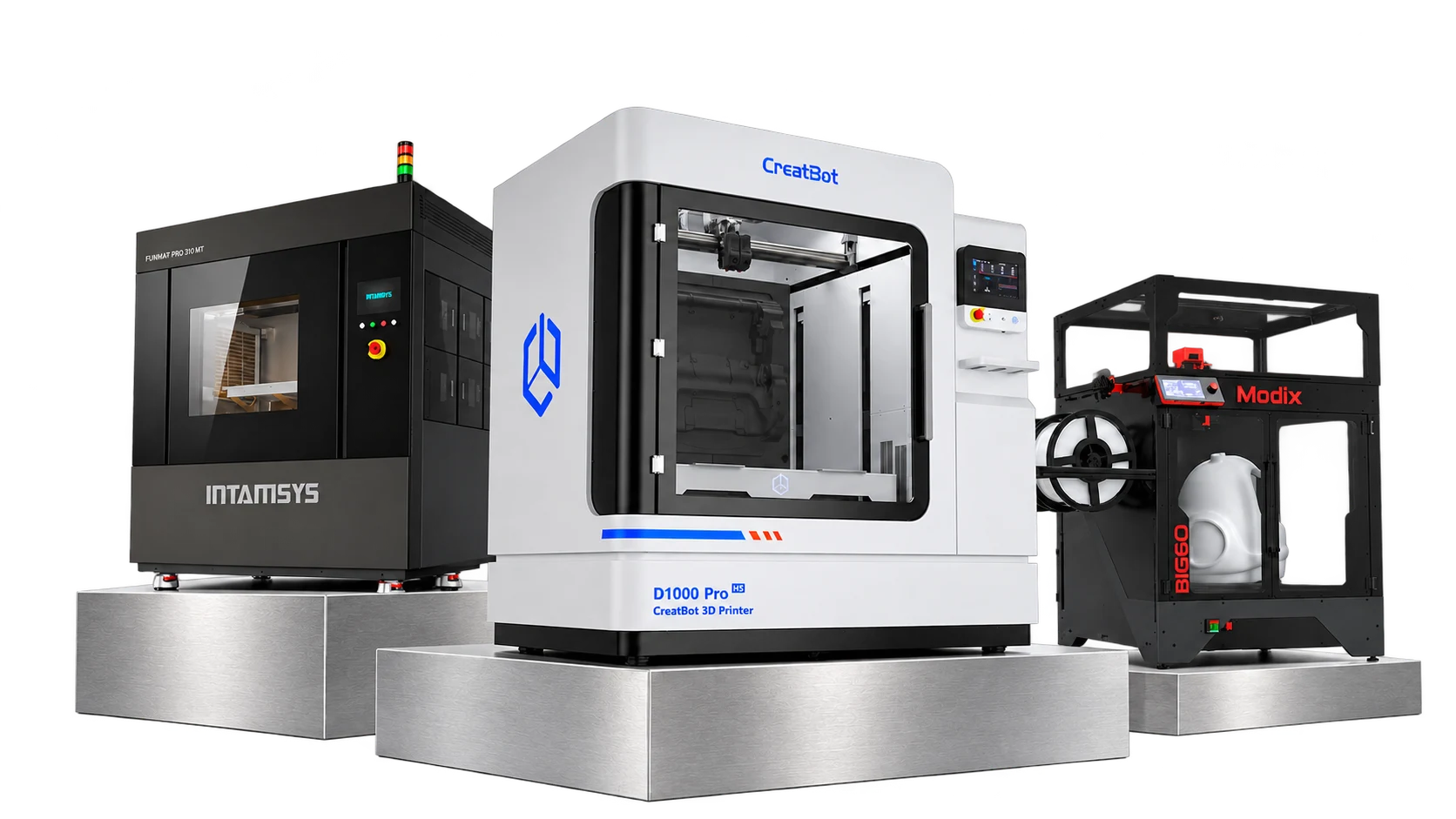
Outgrowing a small printer is an opportunity to upgrade to a large-format 3D printer that enhances production workflow and product quality. At 3D Printers Depot, we offer industrial printing solutions, including the CreatBot D1000 Pro HS and Mingda MD-1000D. Browse our selection to find equipment that accommodates the size and complexity of upcoming projects.